
Your Muscles Aren't Asleep. Here's What's Actually Going On.
"Your glutes aren't firing."
"Your core is turned off."
"You have gluteal amnesia."
These phrases are prevalent in rehab, fitness, and social media, but they are not true in a literal sense.
Outside of nerve damage or a specific neurological condition, a muscle cannot forget how to work. It doesn't have an off switch. Every time you stand up from a chair, your glutes contract, whether you think about it or not. That's not a conscious choice; it's how the nervous system runs basic movement. So if a muscle genuinely can't be "switched off" by sitting too much or moving wrong, why does it so often feel like it can?
Because something real is happening — it's just not what the phrase describes.
Three Different Problems, Often Called the Same Thing
When a muscle feels unresponsive or hard to control, it's usually one of three distinct issues:
- Weakness from disuse: A muscle that isn't used much gets weaker over time, the same way any under-trained muscle would. This is ordinary deconditioning, not malfunction, and it responds to the same thing any weakness responds to — progressive loading.
- A timing or coordination problem: Sometimes the muscle is strong enough but recruits late or inconsistently within a movement. In people with low back pain, for example, researchers have documented a measurable delay in the activation of deep stabilizing muscles during movement. The muscles work, but their timing within the pattern is off, which shifts load onto nearby structures.
- Genuine short-term inhibition: This one is real, but it's more specific than most people assume. Following a joint injury, surgery, or significant swelling, the nervous system reflexively reduces activity in the muscles around that joint — a well-documented phenomenon called arthrogenic muscle inhibition. It's the body protecting a compromised joint, which is why the quadriceps can be notoriously hard to fully engage after knee surgery, even when the muscle itself is undamaged. This mechanism is specific to injured or irritated joints. It is not a general explanation for why a glute or core exercise feels difficult on an otherwise healthy day.
None of these three things involves a muscle "forgetting" anything. They are three different, solvable problems that get flattened into one dramatic phrase.
So What Are Activation Exercises Actually Doing?
If muscles aren't switching off, are exercises like clamshells, band walks, or dead bugs pointless? No — they're just doing something more modest than advertised.
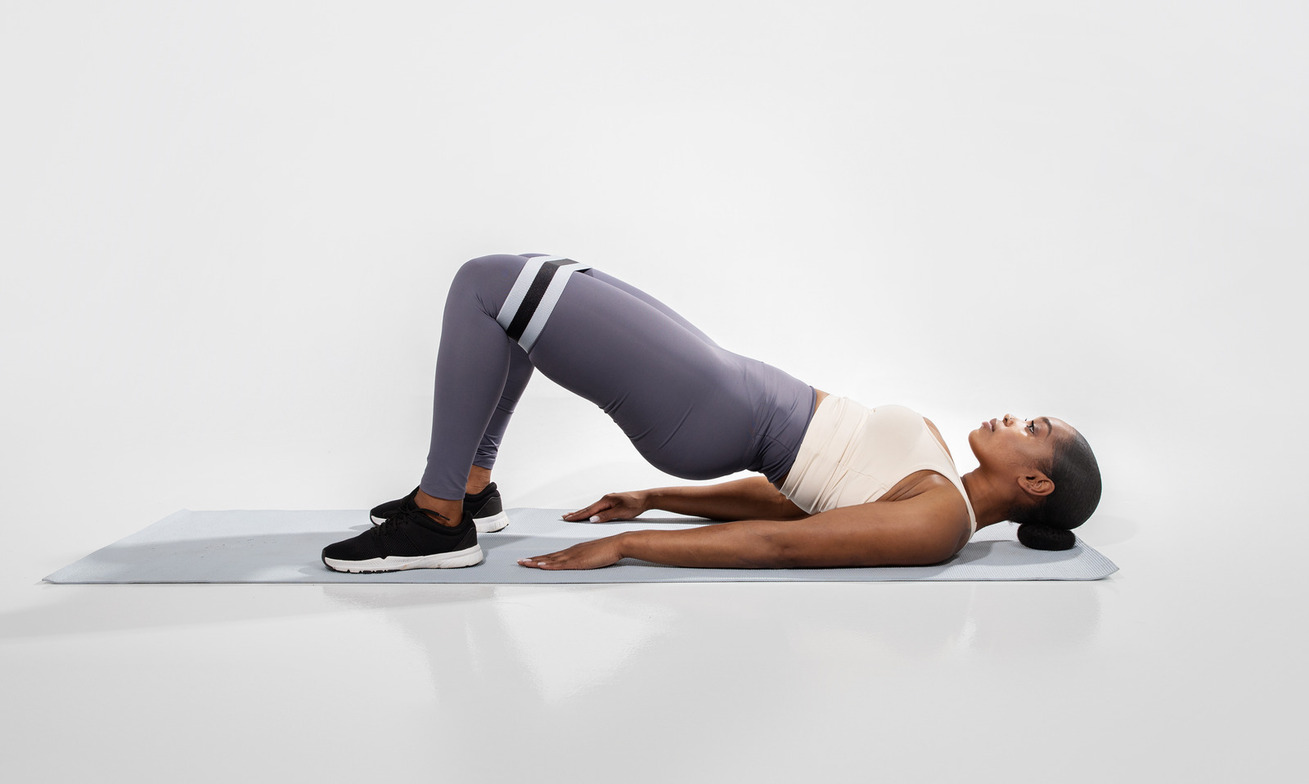
These low-load drills are useful for building "awareness and coordination"— helping someone feel and control a specific muscle without compensating through the low back, hip flexors, or upper traps. That's a real, useful skill, especially for the timing-and-coordination problem described above.
What they don't do is build meaningful strength, and they don't automatically transfer to bigger movements. Feeling a muscle during a slow, low-load drill on the floor is different from using that muscle well during running, squatting, climbing stairs, or lifting. The nervous system organizes movement around the task at hand — a glute drill on the mat doesn't automatically change how the hip behaves during a single-leg landing.
Activation work is often a legitimate entry point. It's rarely the whole plan.
Pain Changes the Picture
When a joint or area hurts, the nervous system tends to get protective — reducing motion, shifting load elsewhere, or stiffening around the region. This is where arthrogenic inhibition and pain-related motor changes actually show up clinically: reduced electrical activity in stabilizing muscles, slower reflex responses, and difficulty voluntarily contracting a muscle on command have been observed in people with joint and low back pain.
This matters practically: if pain or joint irritation is the driver, more repetitions of an activation drill won't move things forward. The limiting factor isn't practice — it's an ongoing protective response that needs to be addressed directly, often before or alongside the exercise itself.
Strength and Capacity Still Have to Come Next
One of the most common reasons activation-style exercises plateau is that they stay too easy for too long. Awareness drills build awareness. Tissues become more resilient through progressive loading, not through repeating the same light exercise. Do the same band walk for six months, and you'll get very good at that specific band walk — without necessarily getting stronger.
This matters most in chronic pain, tendinopathy, and return-to-sport cases, where the end goal was never "control a muscle on a mat." At some point, rehab has to move from awareness into real strength.
Where People Get Stuck
A few misunderstandings often come up:
- Soreness or a "burning" feeling doesn't equal progress. Feeling a muscle is useful feedback, not the only measure that matters.
- Perfect form isn't a permanent requirement. Early rehab often needs precision; long-term function needs adaptability.
- Activation work is usually a bridge, not a life sentence. Once strength, coordination, and confidence improve, most people need it less.
- "Your glutes don't fire" describes a broken body. The evidence doesn't support that. A more accurate version: this area may not be contributing as well as it could for this specific task right now, and that's trainable.
A More Useful Progression
A sensible path through this usually runs in four stages:
- Awareness: Can you feel and control the area without pain or compensation?
- Endurance: Can you repeat that control?
- Strength: Can the tissue tolerate real load?
- Integration: Can you use that capacity while standing, walking, lifting, or playing your sport?
Skipping straight to heavy loading before awareness is established tends to reinforce compensation patterns. Staying in awareness drills indefinitely tends to plateau because awareness was never the end goal.
The more useful question isn't "why won't this muscle turn on." It's "why did the body choose this strategy" — weakness, a coordination gap, pain, fear of movement, or a training load that outpaced current capacity. Once that's clear, an activation exercise becomes one piece of a larger process instead of a stand-in for the whole thing
If an activation exercise has helped you, it likely gave your nervous system useful information about a real coordination gap. If it hasn't, it doesn't mean your body is broken — it usually means the next stage is due.

Edward Boudreau
Contact Me

.jpg)
.png)
