

Motor Control vs Muscle Strength: Knowing the Difference
Pain and movement problems are often blamed on weakness.
A shoulder hurts, so someone assumes the rotator cuff is weak. A knee caves inward during a squat, so the glutes must be weak. A lower back tightens after activity, so the core must not be strong enough.
Sometimes that is true. Strength matters. Stronger muscles help joints tolerate load, absorb force, and build resilience over time.
But strength is not the whole story.
Many people have enough muscle strength to perform a movement, yet they still move poorly, compensate, fatigue quickly, or experience recurring pain. In those cases, the issue may not be that the muscle is too weak. The issue may be that the nervous system is not coordinating the movement well.
That is where motor control comes in.
What Is Muscle Strength?
Muscle strength is the ability of a muscle or group of muscles to produce force. It depends on muscle size, tendon capacity, joint position, nervous system drive, and practice with a specific task, and it improves with progressive loading over time.
Strength is important because life places physical demands on the body. Getting out of a chair, carrying groceries, running, playing sports, and lifting a child all require force production. When the body lacks sufficient strength to meet the demands placed on it, tissues can become irritated.
But strength alone does not guarantee efficient movement.
What Is Motor Control?
Motor control is the nervous system's ability to organize movement.
It is not just whether a muscle can produce force. It is whether the right muscles produce the right amount of force at the right time, in the right sequence, for the task being performed. Motor control involves the brain, spinal cord, nerves, muscles, joints, the balance system, vision, and sensory feedback from the body.
It helps answer questions like:
• Can you control your pelvis during a single-leg stance?
• Can your shoulder blade move smoothly as you raise your arm?
• Can your spine remain coordinated while your hips generate force?
• Can your foot and ankle adapt when the ground changes?
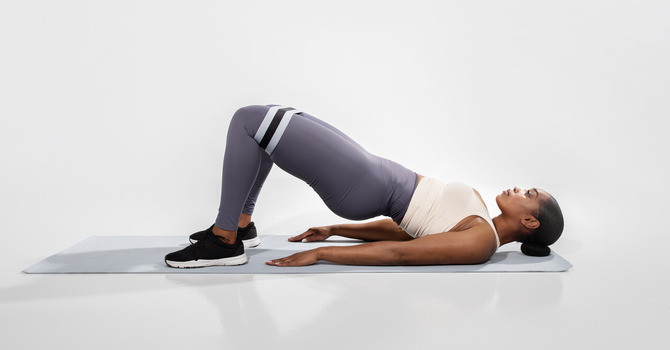
A person may be strong at traditional gym exercises but still lack control in a specific movement pattern. Someone may have strong glutes during a hip thrust but still struggle to control hip and knee position during running, jumping, or stairs. That does not mean the strength work was useless. It means strength has to be connected to movement.
Why the Difference Matters
When strength and motor control are confused, rehab can become too simplistic.
If every problem is treated as a weakness, the solution becomes "strengthen it." But if the real issue is timing, coordination, balance, or poor movement strategy, strengthening alone may not fully resolve the problem.
A person with recurrent lower back pain may have strong abdominal muscles but brace excessively during simple movements. Their problem may not be a weak core; it may be that they cannot relax, rotate, breathe, and load their hips efficiently. Someone with shoulder pain may test strong on resisted exercises, yet their shoulder blade may not upwardly rotate well when reaching overhead. A runner with knee pain may have adequate hip strength in a clinic setting but poor control when landing repeatedly on one leg under speed and fatigue.
This is why good rehab does not only ask, "How strong is this muscle?" It also asks, "How does this person move?"
Pain Can Change Motor Control
Pain can alter movement even in the absence of major injury.
When the body senses threat or irritation, the nervous system may change how muscles activate. Some muscles become more guarded. Others become inhibited. Movement becomes stiff, cautious, or inefficient, and this is protective at first. Limping after an ankle sprain makes sense. The body is trying to protect the area while it heals.
The problem is that protective strategies can persist longer than necessary. After the original pain improves, the body may still move as if the area is fragile, avoiding certain ranges of motion, overusing neighboring muscles, or holding tension during tasks that should feel natural.
This is one reason pain can return even after symptoms calm down. The tissue may feel better, but the movement strategy has not fully normalized.
Common Misunderstandings
One common misunderstanding is assuming that poor movement always means weakness. Sometimes a muscle is weak. But sometimes the person simply does not know how to access a position, coordinate a pattern, or control movement under load. Adding resistance too quickly in that case may reinforce the same compensation rather than correct it.
Another mistake is thinking that motor control work is only "easy rehab" — a stepping stone to the real work. A slow single-leg balance drill, a controlled hip hinge, a breathing exercise, or a shoulder-blade cue can be genuinely important when they teach the body to organize movement more efficiently. That said, motor control work should not stay at the same level indefinitely. It should progress into more demanding strength, endurance, and real-world activity over time.
A Thoughtful Approach to Recovery
Good care is not just about making a painful area feel better for a few days. It is about understanding why the problem developed, what the body currently tolerates, and what needs to improve for the person to move forward with confidence.
Strength and motor control are not competing ideas. They are different parts of the same system. Strength gives the body the capacity to produce force. Motor control helps direct that capacity with timing, coordination, and efficiency. Neither is sufficient on its own; a strong body with poor control may be powerful but inefficient, while a well-controlled body without adequate strength may move nicely but lack resilience under load.
Quality matters before intensity. If a movement consistently feels awkward or compensated, the answer is usually to slow it down, reduce the load, and refine the pattern — not to push harder. But once control improves, the body needs progressive challenge. Muscles, tendons, bones, and joints adapt when exposed to appropriate stress over time.
The goal is a body that can move well, tolerate stress, and meet the real demands of daily life, work, training, or sport — not just perform well in a quiet clinic. That is what long-term recovery actually looks like.

Edward Boudreau
Contact Me

.png)
