
Why Imaging Often Fails to Explain Pain: The Picture Is Not the Whole Story
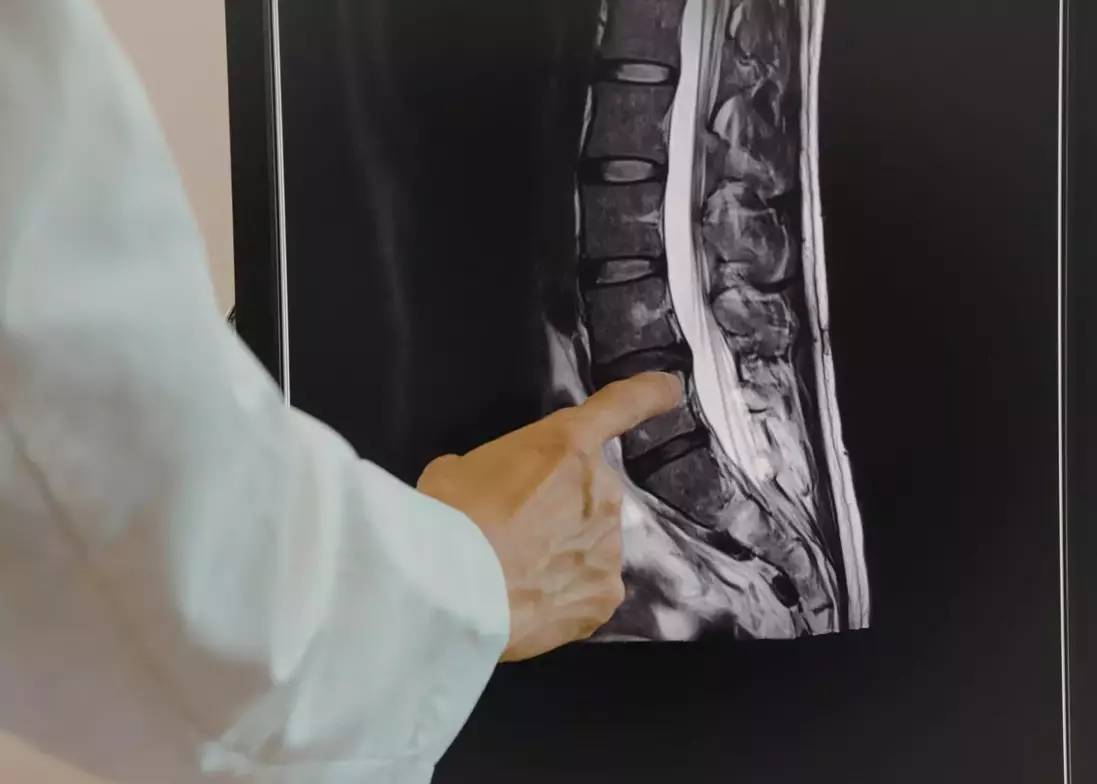
Many people leave an imaging appointment more confused than when they arrived. The report lists disc degeneration, arthritis, bulges, narrowing, or “wear and tear,” and the assumption follows naturally: this must be why I hurt.
But here is the problem. Many of those findings are common in people who have no pain at all. A large systematic review found that spinal degeneration, disc bulges, and other age-related changes appear frequently on imaging in completely asymptomatic people, and the prevalence increases with age. The authors emphasized that imaging findings must be interpreted in the context of the patient, not in isolation.
Imaging can be incredibly useful. X-rays, MRI, CT scans, and ultrasound can identify fractures, tumors, infections, inflammatory disease, severe joint damage, and nerve compression — findings that should not be missed. But a scan that lists abnormalities is not the same as a scan that explains your pain. Imaging findings need interpretation.
Pain Is an Output, Not a Photograph
Pain is not a picture of tissue damage. It is a protective response produced by the nervous system when the brain perceives a potential threat.
That conclusion is shaped by many inputs simultaneously: tissue irritation, inflammation, movement sensitivity, nerve sensitivity, sleep quality, stress, previous injury, training load, overall health, and — importantly — the meaning a person attaches to their symptoms. Being told you have “degenerative disc disease” can itself change how a person moves, how cautiously they load their body, and how they interpret every sensation they feel.
This is why two people can have identical MRI findings and completely different experiences. One person has a disc bulge and severe leg pain. Another has the same finding and feels nothing. The scan shows structure. Pain reflects biology, sensitivity, context, and function — none of which appear on a scan.
This matters for recovery. If pain were simply a readout of structural damage, fixing the structure would always fix the pain. But that is not how it works. Many people improve significantly by addressing strength, mobility, load tolerance, sleep, and movement confidence — without any change to what the imaging shows.
Common Findings Are Often Normal Aging
Terms like “degenerative disc disease” or “arthritis” sound alarming. In many cases, they describe normal age-related changes — much like gray hair or changes in skin texture. That does not make them irrelevant. A severely arthritic hip can absolutely cause pain. A large disc herniation can irritate a nerve root. A rotator cuff tear may be clinically significant in the right context.
But the finding itself is not always the diagnosis.
Rotator cuff tears become more common with age, including in people with no shoulder pain. One classic study found rotator cuff tears in 23% of asymptomatic (non-painful) shoulders, with prevalence rising substantially with age. The tear was present. The pain was not. That distinction matters.
The right question is not simply, “What does the image show?” The better question is, “Does this finding match the patient’s symptoms, examination, history, and functional limitations?”
When Imaging Helps
Imaging is valuable when it answers a specific clinical question.
It is appropriate following significant trauma, when there is progressive neurological weakness, suspicion of fracture, infection, or cancer, signs of inflammatory disease, or symptoms that are not improving as expected. It is also useful when surgery or injection-based treatment is being considered.
Clinical guidelines for low back pain generally recommend against early imaging in uncomplicated cases without red flags. The reason is not to withhold care — it is that early imaging frequently identifies incidental changes that do not explain the pain and can lead to unnecessary worry, additional testing, or interventions that may not help.
Good imaging use starts with a good clinical question.
Common Misunderstandings
“Abnormal” does not always mean “painful.”
Many findings are abnormal only in the sense that they are not perfectly pristine. The human body is not meant to look perfect on a scan.
Pain does not always mean damage.
Tissues can become irritated, overloaded, or sensitized, leading to significant pain without major structural changes.
Imaging findings are not necessarily permanent limitations.
Someone told that they have degeneration may begin moving cautiously for years, avoiding activities they associate with harm. But many people with degenerative findings improve meaningfully when strength, mobility, load tolerance, and movement confidence are restored.
Ignoring imaging is not the answer either.
It matters when the findings align with the clinical story. It becomes misleading when it replaces the story.
Function Tells a Different Story
What imaging cannot show is what a person can actually do. That is often where the most useful clinical information lives.
How does movement load the tissue? Which directions reproduce symptoms, and which do not? Is strength reduced? Are neurological signs present? Is the condition improving, worsening, or changing over time? These questions shape treatment far more reliably than a radiology report summary.
Pain often improves when the body regains capacity — through progressive loading, manual therapy, better recovery, improved conditioning, or simply rebuilding trust in movement. None of that shows up on a follow-up scan. But it shows up in what a person can do.
What to Do With Your Imaging Results
If you have received an imaging report with findings that concern you, a few things are worth keeping in mind.
Ask whether the findings actually match your symptoms. A right-sided MRI finding does not explain left-sided pain. A longstanding degenerative change may not explain a sudden new flare. Structure and symptoms need to line up before a finding becomes a diagnosis.
Do not make long-term decisions based only on a scan. Imaging should contribute to a thoughtful clinical picture — alongside your history, physical examination, and functional assessment — not replace it.
Track how you are actually doing. If pain is improving, strength is returning, and you are doing more than you could before, the body is moving in the right direction — regardless of what the imaging report says.
And know when imaging genuinely matters. New trauma, unexplained weight loss, fever, history of cancer, progressive neurological weakness, or bowel and bladder changes all warrant appropriate evaluation. These are not situations to wait out.
A Thoughtful Long-Term View
A scan can show anatomy. It cannot show capacity, resilience, sensitivity, or recovery potential. It cannot show how well you sleep, how your nervous system is calibrated, or how much your body has adapted to the demands you place on it.
Pain is rarely about one structure in isolation. It is the result of how tissue health, load, sensitivity, recovery, and movement interact — a picture far more complex and changeable than anything a scan can capture.
Use imaging when it is clinically meaningful. Understand it in context. And do not let a report define what you are capable of.

Edward Boudreau
Contact Me


.png)
